






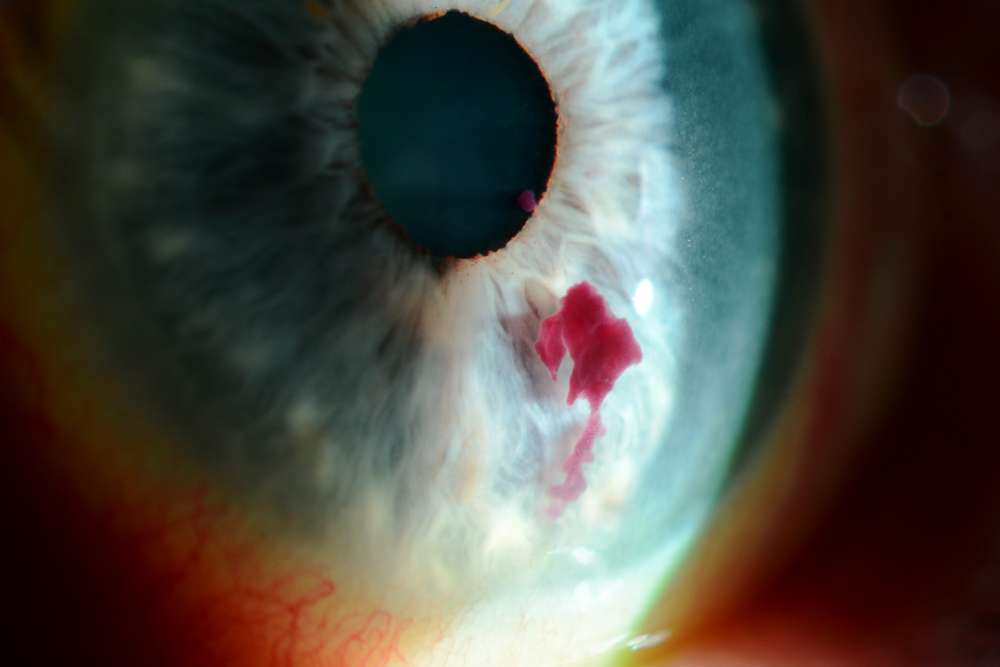

A clear view into the ophthalmoscopy procedure
Almost always performed by an ophthalmologist, or optometrist, the ophthalmoscopy procedure involves a thorough examination of the inside, back part of the eye. This examination centers around the fundus or the center of the eye. It takes anywhere from two to five minutes and is a safe, non-invasive exam technique.
Ophthalmoscopy, retinal examination, or fundoscopy is the key procedure used to visualise the innermost structures of the eyeball, such as:
- Retina
- Retinal blood vessels
- Vitreous
- Optic disc
- Macula
The ophthalmoscopy procedure is commonly included in routine eye exams to screen for a variety of eye diseases. Continue reading to learn more about the ophthalmoscopy procedure as well as different instruments used to perform this essential procedure.
What Is direct ophthalmoscopy?
With the direct ophthalmoscopy procedure, the physician can see magnified views of retinal details, such as the fovea, individual retinal vessels, and optic discs. A direct ophthalmoscope is a used in the ophthalmoscopy procedure that produces an unreversed or upright image of around 15 times magnification.
During the direct ophthalmoscopy procedure, the physician will look for alterations in fundus, pigmentation, and changes in the shape and caliber of retinal blood vessels. You can also use the direct ophthalmoscope to examine opacities of the posterior capsule and the crystalline lense. Although dilation isn’t always necessary, it can help bolster the overall effectiveness of this technique.
Direct ophthalmoscopy is typically faster and easier to perform than indirect ophthalmoscopy. All images appear in normal orientation or upright. The downsides to the direct ophthalmology procedure is a limited and non-stereoscopic of the fundus.
What Is binocular indirect ophthalmoscopy procedure?
The Binocular Indirect Ophthalmoscopy (BIO) procedure is a common way to view the retina by projecting three elements in the eye. The BIO procedure provides a three-dimensional rendition of the patient’s interior eye, which allows for a much more thorough exam.
In contrast to the direct method, the indirect ophthalmoscopy procedure provides a stereoscopic view or a wide field view of the retina. The indirect ophthalmoscopy procedure also allows for the dynamic observation of the retina by simply moving the device, applying scleral depression, and the lens. This process is called indirect because the fundus is viewed through a hand-held condensing lens and inverts and flips the image.
Some binocular ophthalmoscopes are used as aids for teaching, which allows the lead physician to exhibit diagnostic and procedural information to optometry students in the process of conducting an ocular exam. For increased efficiency, there are several BIO accessories available.
What Is monocular indirect ophthalmoscopy procedure?
Monocular indirect ophthalmoscopes offer a wider field of view and higher magnification levels than the traditional ophthalmoscope. As the name suggests, however, monocular indirect ophthalmoscopes only offer a single view of the eye’s interior. For a physician to properly assess a patient’s ocular condition and fundus, you should have the patient look in multiple directions.
What Is slit-lamp biomicroscopy?
The slit lamp biomicroscope allows the physician to monitor and diagnose a variety of retinal diseases in exponential detail. With the assistance of multiple condensing lenses, the physician is able to effectively achieve the desired magnification. Slit-lamp biomicroscopy lenses will fall into one of the two categories:
Non-contact lenses provide a wide field, inverted, stereoscopic image with excellent resolution. The physician can gain views out to the peripheral retina with some lenses. This lense is used to determine the presence of retinal neovascularisation.
Fundus contact lenses are used if the physician suspects edema or subtle thickening. Fundus contact lenses provide images at the same orientation as the retina.
When Is the ophthalmoscopy procedure used?
The ophthalmoscopy procedure is used by eye physicians to screen for a long list of eye conditions and problems that could affect the patient’s blood vessels. Some of conditions screened by the procedure include:
- Retinal detachment or tears
- Optic nerve damage
- Excessive pressure in the eye caused by glaucoma