Binocular indirect ophthalmoscopes: Understanding your options
Keeler
In the evolving landscape of ophthalmic diagnostics, choosing the right indirect ophthalmoscope is crucial for delivering precise patient care. This guide explores Keeler’s comprehensive range, providing insights into the unique capabilities of each model and helping eye care professionals make informed decisions.
The evolution of indirect ophthalmoscopy
Keeler’s journey spans decades of technological advancement, from the first Fison model in 1958 to today’s sophisticated digital solutions. This progression reflects our commitment to addressing the changing needs of eye care professionals.
Comparative analysis of Keeler indirect ophthalmoscopes
Lightweight and compact wireless design – Ideal for practitioners requiring maximum mobility
High-quality optics, precision-crafted lenses and mirrors
Adjustable aperture slider with a variable PD Range: 48 – 76mm
Long-lasting LED illumination
Keeler sport wrap-around frame for maximum comfort and balance
Suitable for on-call and home visit scenarios
All Pupil 2
Cost-effective binocular indirect ophthalmoscope
Robust, reliable performance
Wireless design
Wide angle diffuser and adjustable aperture
Excellent for training environments
Provides essential functionality without additional complexity
Vantage Plus
High-contrast imaging and vivid illumination
Advanced optical performance with Intelligent Optics
Designed for high-volume specialist practices
Wireless design
Balanced colour temperature
High magnification
Ergonomic design with balanced comfort
Extended battery life with backup power option
Premium design and build quality
Vantage Plus Digital
Unparalleled optics and visual performance
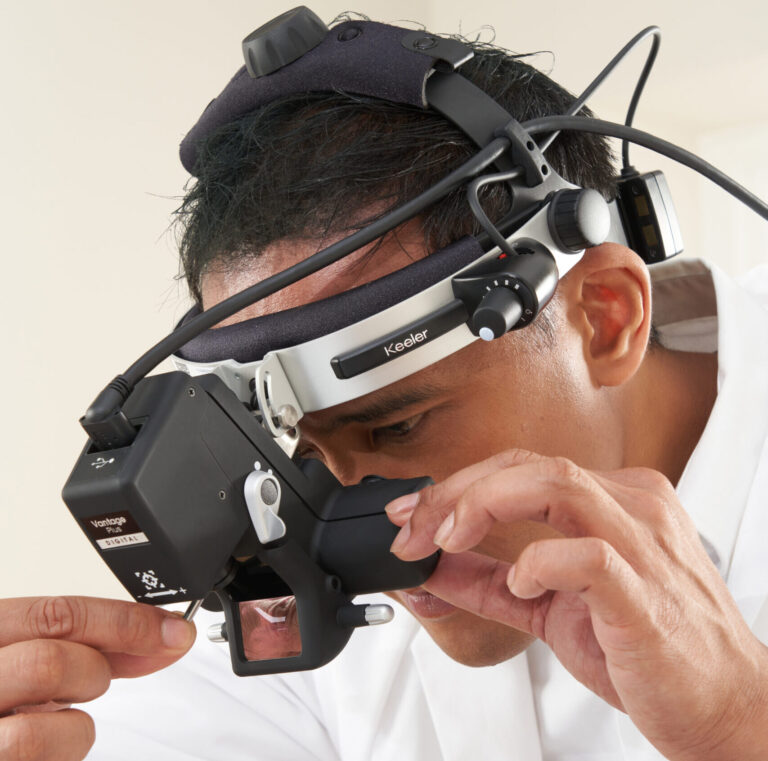
Integrated digital streaming capabilities
Image capture and documentation with Kinexis software
Widened field of view
Large depth of field up to 100mm and customised design to ensure stable images
Optimised for remote consultations
Supports academic training and research environments
Frequently asked questions
1. Which ophthalmoscope is best for new practitioners?
Either the All Pupil II or Vantage Plus. Both offer an excellent balance of affordability and fundamental functionality, making it ideal for those beginning their career.
2. How do digital capabilities impact diagnostic procedures?
The Vantage Plus Digital allows real-time streaming and image capture, enabling enhanced collaboration, remote consultation, and comprehensive documentation. Enquire today to request a demo of the Vantage Plus Digital today.
3. How portable are the BIOs in Keeler's range?
All of the BIOs in Keeler’s indirect portfolio come with an optional carrying case for easy transport. However, the Spectra Iris stands out as the most portable option. Designed for portable use, the Spectra Iris comes in a compact, lightweight case that makes it easy to carry around and use on the go. This makes it an ideal choice for residents, trainees, and practitioners who need to move between exam rooms or visit patients in different locations.
4. When should you use a BIO?
Binocular indirect ophthalmoscopes are an essential tool in the ophthalmologist’s arsenal for examining the posterior segment and periphery of the eye.
By using a condensing lens and a wide field of view, binocular indirect ophthalmoscopes allow ophthalmologists to obtain a magnified, stereoscopic view of the retina, optic nerve, and other structures at the back of the eye. This 3D perspective provides crucial information about the health and function of the eye that cannot be obtained through other examination methods.
Indirect ophthalmoscopes are particularly useful for detecting and monitoring conditions like diabetic retinopathy, macular degeneration, retinal detachment, peripheral retinal tear and optic nerve disorders. Their versatility, diagnostic power make them an indispensable part of comprehensive eye care, and the only way to view 360 degrees using BIO examination and scleral indentation.
5. How to position a BIO to reduce fatigue
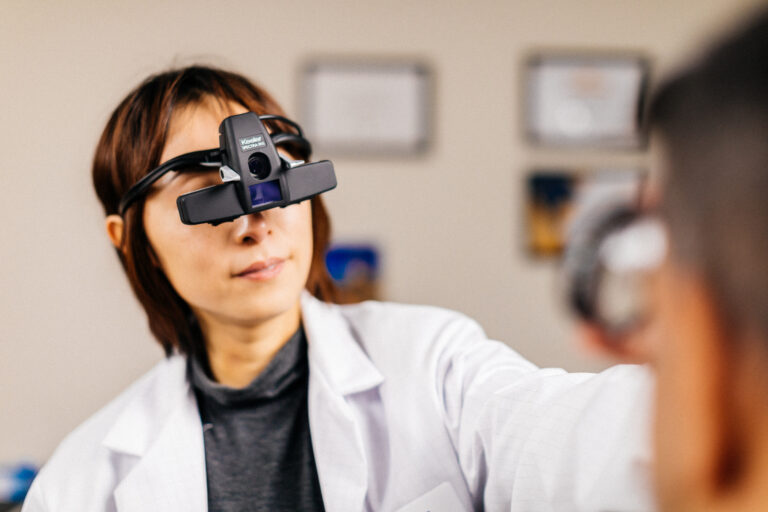
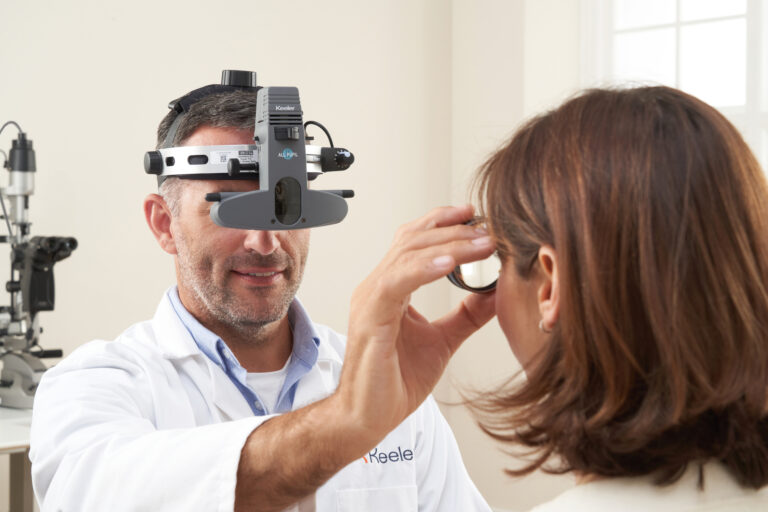
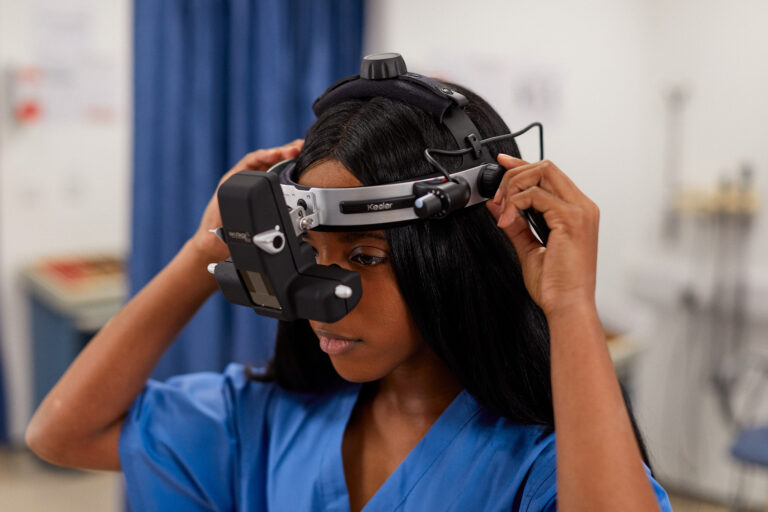
BIOs are designed to be worn on the head, allowing ophthalmologists to examine patients’ eyes without having to hunch over or crane their necks. The lightweight, balanced construction distributes the device’s weight comfortably, preventing neck and back strain during prolonged use. The rear of the indirect should be worn as far back as possible, near the nape, while still being able to see through the oculars for optimal comfort.
This hands-free design enables ophthalmologists to easily manipulate the patient’s eyelids and position the condensing lens without sacrificing stability or ergonomics. The ability to maintain a natural, upright posture while using an indirect ophthalmoscope greatly reduces physical fatigue, allowing for more thorough and comfortable exams, especially during busy clinic days.
6. What considerations should guide my selection?
Key factors include:
Comfort
Practice volume
Budget constraints
Mobility requirements
Technological integration needs
Conclusion: precision-engineered for professional excellence
Each Keeler indirect ophthalmoscope represents a carefully designed solution, addressing specific professional requirements. Our range ensures that regardless of your practice’s unique demands, there’s a precisely engineered tool to support your diagnostic capabilities.
Interested in a detailed consultation about which model best suits your practice? Get in touch with our team today to find out more.