






Shining a spotlight on Age-related Macular Degeneration (AMD)
This #AMDmonth, we’d like you to join us in advocating for early detection, by empowering those you care about with knowledge, and generally raising awareness of this prevalent eye condition which affects millions of people worldwide.
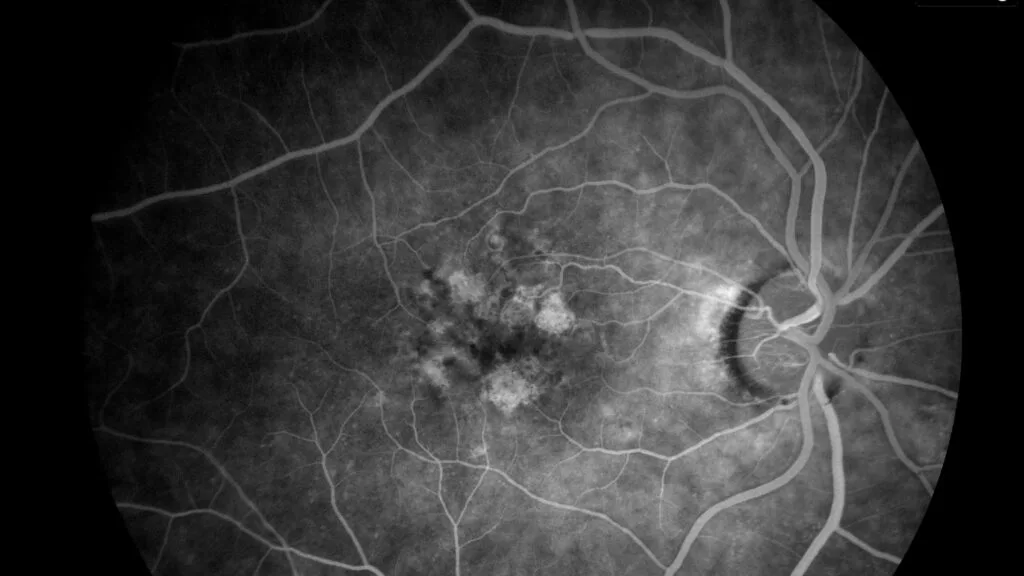
Early Fluorescein Angiography (FA). Image captured after delivery of 10% AK-Fluor dye. Photo courtesy of James B. Soque, CRA, OCT-C, COA, FOPS, Imaging Specialist, Vitreoretinal Consultants of New York
Understanding AMD
AMD is a progressive disease that primarily affects the macula, the central part of the retina responsible for sharp, detailed vision.
As we age, changes in the macula can lead to blurred or distorted vision, impacting daily activities such as reading, driving, and recognising faces.
Detecting AMD
Early detection is paramount in managing AMD. Regular eye exams are essential for detecting signs of AMD, such as drusen (yellow deposits under the retina) or pigment changes. There is a wide range of Keeler products available for use during such eye examinations, to support accurate diagnosis. These include table-top or portable slit lamps, handheld direct ophthalmoscopes, and binocular indirect ophthalmoscopes.

In the fight against AMD, advanced imaging technologies are invaluable. Optical Coherence Tomography (OCT), Fluorescein Angiography (FA), and Fundus Autofluorescence (FAF) all offer clinicians unprecedented insights into retinal structure, vascular dynamics, and metabolic changes associated with AMD.
Within the USA, Keeler supply injectable fluoresceine within their wider pharmaceutical range, which is available in both 10% and 25% formulations, to clinicians within the eyecare industry.
Early Fluorescein Angiography (FA). Image captured after delivery of 10% AK-Fluor dye. Photo courtesy of James B. Soque, CRA, OCT-C, COA, FOPS, Imaging Specialist, Vitreoretinal Consultants of New York
Lowering the risk of AMD
Although AMD is primarily age-related, certain lifestyle factors can influence its development.
Encouraging patients to maintain a healthy lifestyle, including a balanced diet rich in antioxidants and omega-3 fatty acids, may help reduce their risk. Additionally, avoiding smoking and protecting the eyes from harmful UV rays by wearing sunglasses and hats can also contribute to eye health.
In the realm of AMD management, collaboration among healthcare professionals is essential.
Management of AMD
Optometrists, ophthalmologists, retinal specialists, and other allied professionals work together to provide comprehensive care tailored to each patient’s needs.
Together, we can make strides in AMD awareness and early detection, optimise diagnosis and treatment outcomes, and enhance the quality of life for individuals affected by this sight-threatening condition.