World Diabetes Day 2024: The critical role of advanced eye care technology in diabetic patient care
Keeler
November 14th marks World Diabetes Day, providing an important opportunity to examine the intersection of diabetes management and advanced ophthalmic care. For eye care professionals, having the right diagnostic equipment is crucial for early detection and effective monitoring of diabetes-related eye complications.
Understanding the diabetic eye
Diabetes affects approximately 537 million adults worldwide, with numbers rising annually. This metabolic disorder doesn’t just impact blood sugar levels – it creates a cascade of effects throughout the body, particularly in the delicate structures of the eye. For ophthalmologists, three primary concerns demand attention:
Diabetic retinopathy: the silent threat
Diabetic retinopathy remains the leading cause of vision loss in working-age adults. What makes it particularly challenging is its initially asymptomatic nature. Early detection through advanced imaging technology including Keelers new digital VPD is crucial for preventing irreversible damage.
Key equipment focus: As diabetes prevalence grows, equipping practices with advanced ophthalmic technology will be increasingly crucial. Practices that invest in the latest diagnostic tools are well-positioned to:
Detect and manage complications early
Offer precise and targeted treatment plans
Track patient outcomes over time
Maintain comprehensive, detailed records for continuity of care
Support research and further advancements in diabetic eye health
Accelerated cataract development
While cataracts are common in aging populations, diabetes accelerates their formation and progression. Keeler slit lamp imaging systems allow for detailed documentation and monitoring of these changes, enabling better surgical planning and outcomes tracking.
Glaucoma: The Compounded Risk
Diabetic patients face a significantly higher risk of developing glaucoma. Keeler’s tonometry systems slit lamp portfolio coupled with advanced visual field analyzers and OCT nerve fiber layer analysis, provide the comprehensive data needed for early intervention.
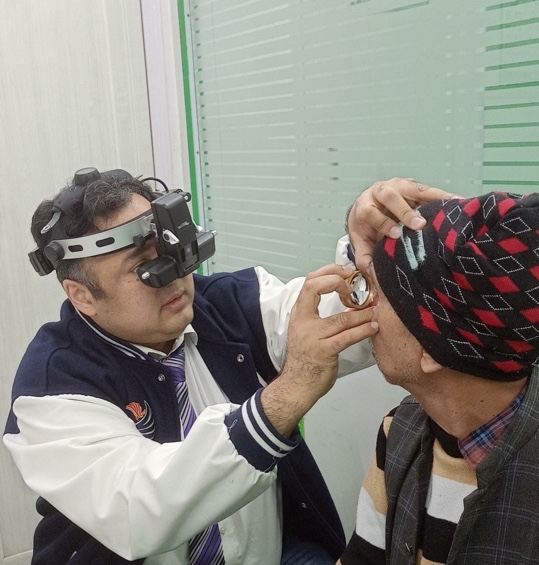
Kenshuk Marwah using Keeler Vantage PlusBIO in his screening in diabetic community service in Tughlaqbad, Delhi India
The business case for advanced diabetic eye care
As global diabetic screening programs continue to expand, the importance of investing in advanced diabetic eye care technology grows. Here are key benefits:
Expanded patient base: With diabetes rates rising globally, practices equipped for comprehensive diabetic care are well-positioned to meet increased patient demand, particularly as screenings identify more individuals needing follow-up eye care.
Enhanced detection: Access to advanced technology enables earlier and more accurate diagnosis, improving outcomes and aligning with the goals of screening programs that aim to prevent vision loss through timely intervention.
Improved efficiency: Integrated diagnostic systems streamline workflow, allowing practices to handle higher patient volumes effectively, which is critical in countries where diabetic eye screenings are becoming more widespread.
Robust documentation: Comprehensive imaging capabilities ensure high-quality documentation that meets medical necessity standards, supporting accurate patient records and treatment tracking, and facilitating communication with national screening programs.
Overall, investing in cutting-edge eye care technology enhances a practice’s ability to support global screening efforts, improve patient outcomes, and drive sustainable growth.
Conclusion
World Diabetes Day reminds us that effective diabetic eye care requires both clinical expertise and advanced technology. At Keeler we are committed to supporting eye car professionals with the tools they need to provide optimal care for their diabetic patients.
This blog post is part of our commitment to supporting excellence in ophthalmic care. Follow us for more updates on equipment innovations and clinical practice enhancement.